CTIA’s TZM Alloy in Forging Dies
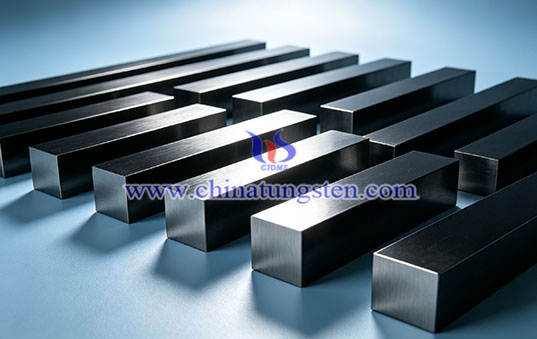
TZM alloy (Titanium Zirconium Molybdenum) is a molybdenum-based alloy applied for high-temperature pressure forming applications. It is mainly used for forging dies, die inserts, punches, cores, and other high-temperature load-bearing components. During forging processes, dies are exposed to high temperatures, high pressures, impact loads, and repeated thermal cycles, requiring materials with excellent high-temperature strength, creep resistance, wear resistance, and dimensional stability. CTIA’s TZM alloy uses molybdenum (Mo) as the matrix with titanium (Ti: 0.40%–0.55%), zirconium (Zr: 0.06%–0.12%), and carbon (C: 0.01%–0.04%) additions to form TiC and ZrC dispersion-strengthened phases. Manufactured through powder metallurgy, CTIA’s TZM alloy maintains excellent structural stability and service life during high-temperature forging operations.
Why Is CTIA’s TZM Alloy Suitable for Forging Dies?
CTIA’s TZM alloy offers the following advantages:
(1) Excellent high-temperature strength retention: With high-temperature load-bearing capability and a room-temperature tensile strength of 600–900MPa, it maintains deformation resistance under forging pressure, reducing the risk of die collapse and failure.
(2) Excellent creep resistance: TiC and ZrC dispersion-strengthened phases improve high-temperature deformation resistance, with a tensile strength of approximately 500MPa at 1000°C, reducing dimensional changes during long-term exposure to heat and pressure.
(3) Strong thermal fatigue resistance: With a high recrystallization temperature of approximately 1350–1450°C and excellent microstructural stability, it withstands repeated heating and cooling cycles during forging while reducing thermal cracking.
(4) Good wear resistance: With stable microstructure and high hardness, it reduces surface wear under high-temperature metal flow and friction conditions, extending die service life.
(5) High dimensional stability: With a low coefficient of thermal expansion of approximately 5.5–5.9×10⁻⁶/K, it maintains dimensional accuracy under thermal cycling conditions, meeting precision forging requirements.
Applications of CTIA’s TZM Alloy in Forging Dies
CTIA’s TZM alloy is mainly used in:
(1) High-temperature precision forging die components for nickel-based superalloys, titanium alloys, and refractory metal parts in aerospace, energy equipment, and other industries;
(2) Hot forging die components for manufacturing aero-engine blades, gas turbine parts, and high-performance structural components;
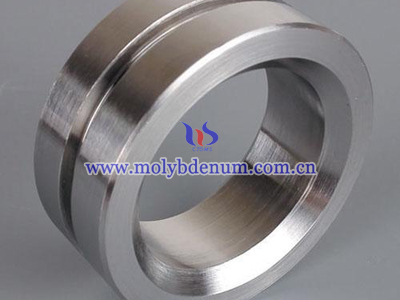
(3) High-temperature pressure-bearing die components, including die cores, die inserts, punches, and ejector rods;
(4) Key hot-working die components in automotive, engineering machinery, and advanced equipment manufacturing;
(5) Heat-resistant die components for powder metallurgy hot pressing and metal hot-working processes.
Specifications of CTIA’s TZM Alloy in Forging Dies
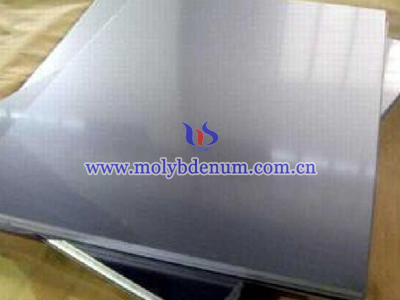
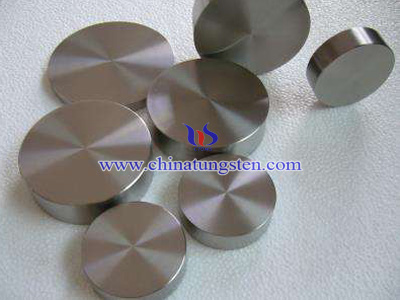
(1) Product Forms: TZM plates, TZM rods, TZM discs, TZM forging die blanks, and customized TZM components
(2) Dimensions: Customized thicknesses, diameters, lengths, and structural dimensions available
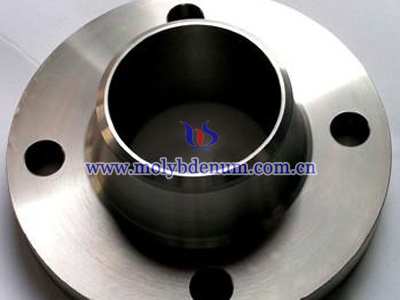
(3) Processing Conditions: Semi-finished materials and precision-machined finished components
With nearly 30 years of experience in molybdenum and molybdenum alloy manufacturing, CTIA GROUP has capabilities in TZM material development, powder metallurgy production, and high-temperature die machining. By optimizing material microstructure and processing technologies, CTIA provides precision-machined TZM alloy components for forging dies, meeting requirements for deformation resistance, dimensional stability, and long-term service performance.
For any inquiry, please contact molybdenum and molybdenum alloy manufacturer: CTIA GROUP
Email: sales@chinatungsten.com
Tel: 0086 592 5129696 / 0086 592 5129595
Website: www.molybdenum.com.cn
WeChat:

Inquiry & Feedback
Related Products: